Guatemala Service Projects Inc.
  • Menu Item
    • Home
    • Newest Projects
    • Ongoing Projects
      • Community Potable Water
      • Water Filters
      • Health Clinic and Medical Fund
      • Vitamins
      • Stoves
      • 10 Bucks a Cluck
      • Seeds
      • Student Sponsorship
      • Economic Development
      • Fund a Library
    • Get Personal
      • Overview
      • Memorials and Honorariums
      • Shop 100% Donated to GSP
      • Buen Provecho Guatemalan Recipes
      • Blue Q
    • Travel Teams
    • Blog
    • Contact Us
      • Meet the Team
      • Our Mission
      • Who We Support
      • Student Advisory Board
    • DONATE
Guatemala Service Projects Inc.
  • Home
  • New Projects
  • Ongoing Projects
    • Potable Water
    • Water Filters
    • Health Clinic and Medical Fund
    • Stoves
    • Vitamins
    • Student Sponsorship
    • Fund a Library
    • 10 Bucks a Cluck
    • Seeds
    • Economic Development
      • Entrepreneurship Program
      • Meet the Entrepreneurs
  • Ways to Help / Shop
    • Overview
    • Memorials and Honorariums
    • Shop 100% Donated to GSP
    • Buen Provecho Guatemalan Recipes
    • The Blue Q
  • Travel Teams
  • Blog
  • Contact Us
    • Meet the Team
    • Our Mission
    • Who We Support
    • Student Advisory Board
  • DONATE

Responding to a LinkedIn post from the Luis von Ahn Foundation
jennifer
June 13, 2024
Blog Post

Education is the key to empowerment, yet indigenous women in Guatemala face significant barriers. The average years of schooling for women in Guatemala is only 5.3, and that numbers lowers to just 3 years for Indigenous women. While strides have been made in enrollment parity, quality education remains a challenge, especially in secondary education for indigenous women. Let’s work together to break down barriers and ensure every woman has access to the education she deserves.

https://www.linkedin.com/posts/luis-von-ahn-foundation_educaciaejnparatodos-empoderamientofemenino-activity-7205946817954398209-JG3N

Barriers because of GENDER:

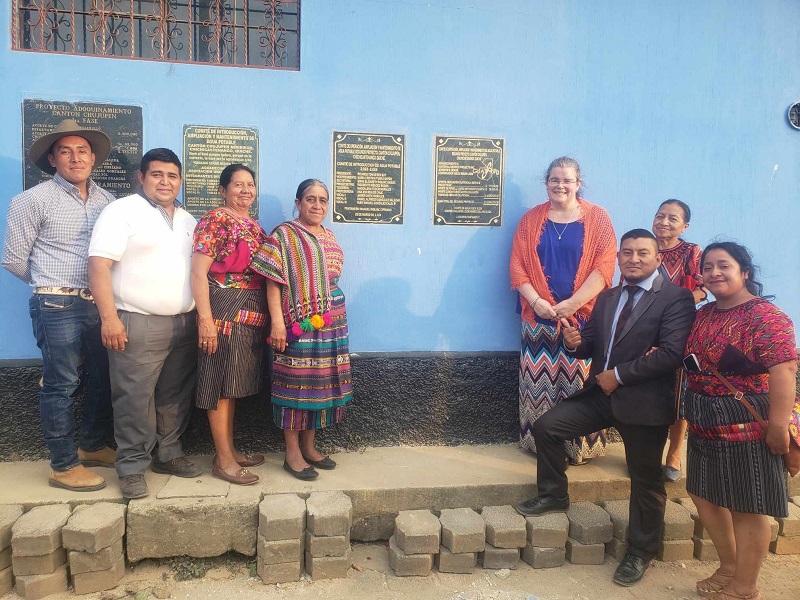
One of the ways our organization breaks down the barriers is by creating a shift in mindset. When the president of our nonprofit (a woman) visits with the communities in Guatemala, we show an example of a woman in a leadership position. And, when there are female members of the COCODE in a rural community we are visiting, or specifically the OPF for educational settings, we take note of that and compliment the group when multiple voices and positions are heard. In a recent potable water project we supported, the water committee from Cantón Chujupén had more women than men!
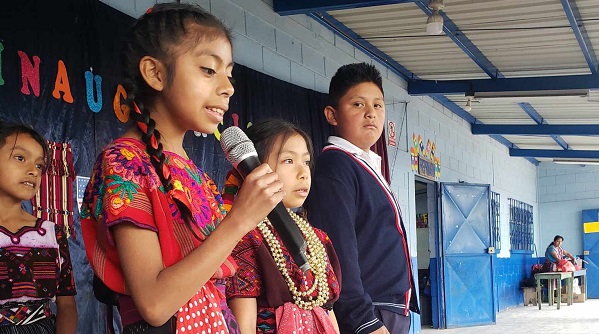
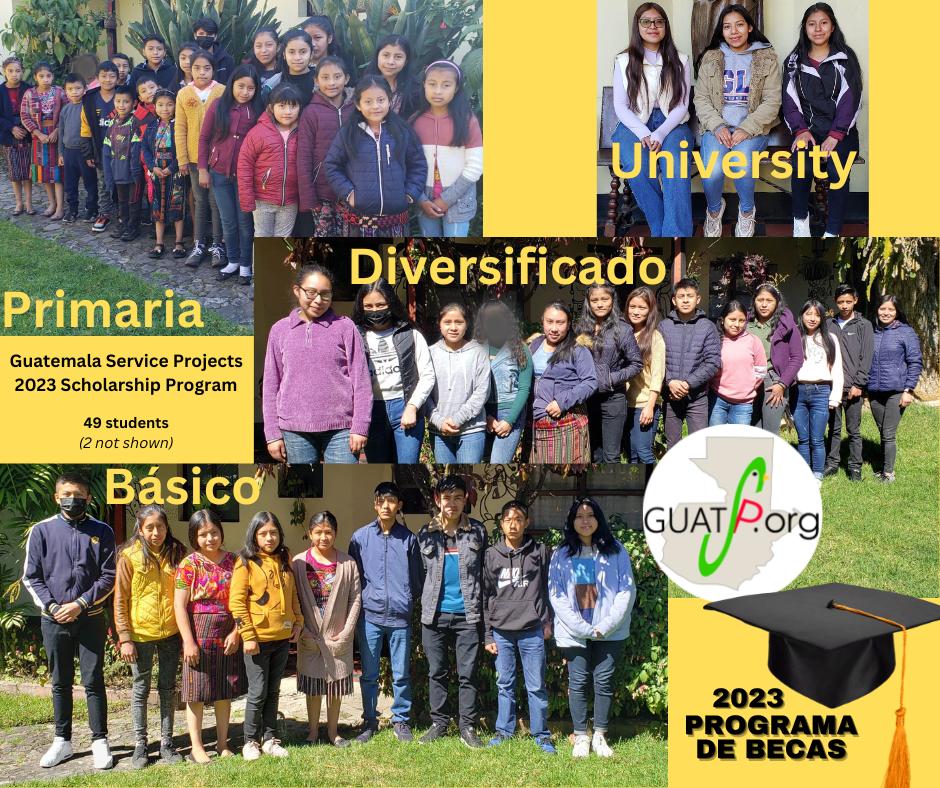
As far as educational opportunities themselves, our scholarship program is currently weighted 67% female (41 out of 61 students) covering all levels of education, from primaria to university.  

In our programa de becas, we stress to the parents the importance of the education that their daughters will receive and get their buy-in so that there is support from the family. Oftentimes, girls don’t have the opportunities for education not because they don’t want to take advantage but because their parents feel it is not as important as other things. Girls need to know that their educational pursuits are supported, that they are deserving students, and that the world is their oyster!

NOTE: The photo below is from our 2023 roster, but in 2024 we grew from 49 to 61 students!
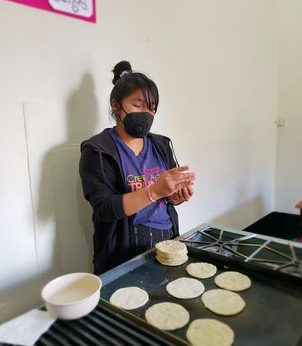
In our entrepreneurship program, we also support the business ventures of women! We try to help women advocate for themselves and be capable of success in business ventures. Instilling this confidence and giving these opportunities falls under education as well, because we are teaching about business administration, accounting, and marketing — all the while building up the morale of female leadership within a community!

But, gender roles are not the main barrier to higher/secondary education in indigenous rural areas, in my opinion… it is the lack of those institutions of learning!

Barrier affecting all:

Our nonprofit works in Chichicastenango (Quiché department) as a nexus. Within the 90+ cantones in that municipality, few of them have institutions at the básico or diversificado (middle school and high school) level. So, many rural communities don’t even begin to dream beyond 6th grade because there isn’t a school of higher learning within a walking distance and few/none of the families have transportation. For some of the remote communities, there is not even access to mass transportation if the families could even afford it.

So, if you are brought up not to dream of education beyond 6th grade (for boys OR girls) then it is sometimes hard to stay focused and value the education you’re getting at the lowest level. The cycle repeats…

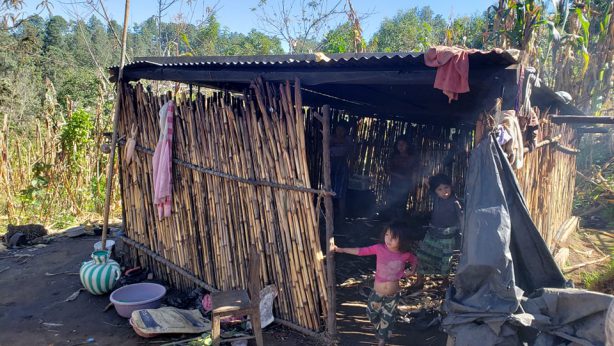
Case in point: one of the communities we have been supporting is Cantón Panimaché Quinto Bajo — which is so far on the outskirts of Chichicastenango that it is almost in Sololá! Because it is so remote, it is a “forgotten” community. It has an elementary school that, before COVID, had two teachers to cover all six grades, but since schools returned to “in person” only one teacher has been assigned by the Ministry of Education…. ONE TEACHER for SIX GRADES!!!

Meet the community of Panimaché Quinto Bajo:
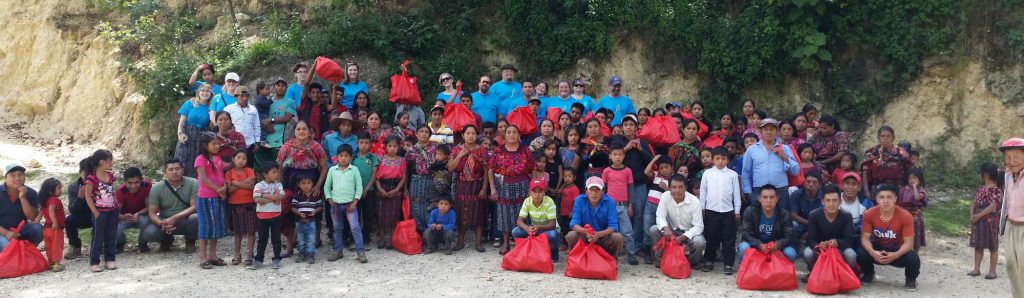
The community of Panimache Quinto Bajo

In that small community of about 30 families, there are no professionals. All of the parents are basically day laborers. Not all of the school-age children are attending school because the parents are not stressing it and the school they have (while the teacher is excellent) does not have the other resources it needs.

In this community, we have built a health clinic, trenched a water distribution system and built two community pilas, erected a community chicken coop, donated stoves, provided a library, and bought school supplies and backpacks for the entire school population.

Our dream is to build a básico school or a specialized training center that encourages the students there to dream of a higher education — for all the girls AND all the boys.

Yes, it is important to make higher education accessible to girls. We need to break down the barriers that exist along gender lines and educate the young women of Guatemala, for they will change the world!

But, it is also important to make high education accessible to EVERYONE in Guatemala, because all kids need that fighting chance. And yes, education is the key to empowerment. Let’s put that key in all hands, so that many doors will be opened…
Tags: barriers to education education Guatemala indigenous women LinkedIn Luis von Ahn Foundation women empowerment
Previous Story
That Book Woman… and Me
Next Story
Remarkably Unremarkable (still)

Related Articles

A Non-Success Story (and that's ok)

Guatemalan Shark Tank?     On my first trip to Guatemala...

Spend one week building a home in Guatemala

We're looking for an enthusiastic group to build a home...

Leave your comment Cancel Reply

(will not be shared)

Subscribe by Email

Get notified of new posts and updates!
Loading

Every Dollar Helps!

DONATE
*NOTE: We are a registered 501c3 nonprofit organization based in the state of Wisconsin. You can make a one-time or recurring donation at the bottom of our Home page.

Recent Posts

  • Remarkably Unremarkable (still)
  • Responding to a LinkedIn post from the Luis von Ahn Foundation
  • That Book Woman… and Me
  • A Non-Success Story (and that’s ok)
  • Our Priceless Gifts

Recent Comments

  • jennifer on Spend one week building a home in Guatemala
  • Desirae on Spend one week building a home in Guatemala
  • Dennis on Remarkably Unremarkable
  • Mike on Remarkably Unremarkable
  • Steve Poe on Remarkably Unremarkable

Archives

  • August 2024
  • June 2024
  • December 2023
  • August 2022
  • May 2022
  • April 2022
  • January 2022
  • June 2021
  • April 2021
  • January 2021
  • November 2020
  • October 2020
  • August 2020
  • May 2020
  • December 2019
  • November 2019
  • October 2019
  • September 2019
  • August 2019
  • June 2019
  • May 2019
  • April 2019
  • March 2019
  • February 2019
  • December 2018
  • November 2018
  • October 2018
  • September 2018
  • August 2018
  • July 2018
  • June 2018
  • May 2018
  • April 2018
  • March 2018
  • February 2018
  • January 2018
  • December 2017
  • November 2017
  • October 2017
  • August 2017
  • July 2017
  • June 2017
  • May 2017
  • April 2017
  • February 2017
  • January 2017
  • December 2016
  • November 2016
  • October 2016
  • September 2016
  • August 2016
Copyright ©2025 Guatemala Service Projects. All Rights Reserved
Peggy McDaniel

My name is Peggy McDaniel.  I discovered my love for Guatemala and the Mayan culture on my first volunteer trip there in 2012. I have been fortunate to return many times since. I’ve worked with several coffee farmer groups, women weavers, rug hookers as well as building homes and delivering water filters to the out lying and remote villages. The resilience of the Guatemalan people and the smiles of the children keep me going back.  I recently retired after 35 years being a potter and now I get to enjoy extended stays down there. I hope to continue working with the people of Guatemala in any way I can to enrich their lives as much as they have enriched mine!

Guatemala Service Projects Inc

LA NECESIDAD

Guatemala es un país en desarrollo con belleza en todos lados: volcanes activos, diversos ecosistemas, mercados de artesanías de fama mundial, una rica historia colonial Maya y Española y un paisaje montañoso increíble se combinan para formar la Tierra de la Eterna Primavera.

Su gente, igualmente hermosa en herencia y tradiciones indígenas Mayas, enfrenta desafíos en la vida diariamente que la mayoría del mundo desarrollado da por hecho. La desnutrición crónica, el analfabetismo, las escasas oportunidades económicas, el aislamiento social, el acceso deficiente al agua potable y el ingreso sistémico y la desigualdad de la riqueza son resultados duraderos de la guerra civil de 36 años del país. Las estadísticas son sorprendentes, como el 59% de la población que vive por debajo del umbral de pobreza nacional y el 23% que vive en la pobreza extrema, con el 13.4% de las familias que dependen del trabajo de menores para sobrevivir.

A pesar de todo esto, la verdadera belleza de Guatemala es la perseverancia, los valores y la esperanza de su pueblo para un futuro mejor. Cuando los recursos están disponibles, los miembros de la comunidad se unen para mejorar sus condiciones de vida, salud y educación.


NUESTRO DESAFIO 

Guatemala Service Projects, Inc. existe para llevar estos recursos escasos a las comunidades que estan ansiosos de mejorar los resultados para las generaciones  presentes y futuras. Los miembros de nuestra junta y los intermediarios de confianza en Guatemala se comunican directamente con los comités, educadores y organizaciones de las aldeas que especifican la prioridad de sus necesidades e identifican los recursos que podemos proporcionar. Las mejoras en las instalaciones escolares, los programas de vitaminas, las bibliotecas, los patrocinios educativos y los jardines comunitarios son solo algunos ejemplos de los programas que tenemos en marcha. Los miembros de nuestra junta viajan periódicamente a Guatemala con equipos de viaje para participar de primera mano en los proyectos que apoyamos mediante la entrega de suministros, la colaboración con educadores, la instalación de equipos y la distribución de productos donados. Ser testigo de la resolución, la laboriosidad y el aprecio de nuestros beneficiarios nos da el ímpetu para seguir ofreciendo estas oportunidades.


TU APOYO

Agradecemos su visita a nuestro sitio web para explorar todas las formas en que Guatemala Service Projects, Inc. crea nuevas posibilidades para las comunidades desfavorecidas e indígenas en Guatemala. Su apoyo es la fuerza impulsora de nuestra organización y esperamos su ayuda con nuestras iniciativas.

Michael Margolies

Hi, I’m Mike Margolies. Lillian (my wife) and I brought Andrew home from Guatemala on October 11th, 2001. It was exactly one month after 9/11, the horrendous day that no one will ever forget. From the window of my parents’ apartment, I watched the smoke billow out from Ground Zero, having the same fears and sorrow as the rest of the country, but also feeling intense personal sadness that despite all the time, work, and effort which had exhausted us emotionally and physically, our hopes were floating away as well. It is just one more reason why I have always considered the adoption as a gift, which demanded some type of repayment. That feeling grew even stronger over the recent past, as I’ve learned about the refugee crisis, and heard “Guatemala” mentioned so many times on the news.

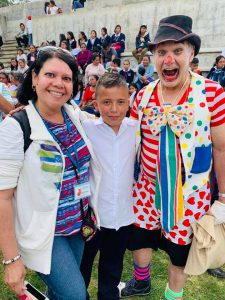
The “right” opportunity arose when I learned about a travel opportunity for adoptive families which would include volunteer work and cultural sightseeing. Being members of that team had a profound impact on me, Lillian and Andrew. Not only were we able to make a real connection to our son’s birthplace, but we met incredibly warm and generous people, all of whom we now consider to be a part of our “family.” In addition to the volunteer work I shared with the Team, I also was able to “give back” by performing as my alter ego, “Farfel the Clown” at a barbecue for children of The Backyard School. It will remain one the proudest and happiest memories of my life.

While in Guatemala, I got to know some of the most courageous and impressive people I’ve ever met in my life, people that create opportunity and help the Guatemalan people. Through participation on that team, I had the wonderful pleasure to meet Jennifer Demar, who not only always promptly responds to my FB messages, but “gets” my offbeat and silly humor. Through the donation of my time, money and ideas, as well as via future repeat trips to Guatemala, I am committed to the mission of Guatemala Service Projects.

I feel very proud and honored to have been selected as a member of the GSP Board, and I am looking forward to serving and assisting with the foundation to the best of my ability.

Trent Faith

I found Guatemala through a Transcultural Healthcare trip I took with WCTC in 2016.  I graduated in May of 2017 after  studying Surgical Technology.  I am the father of two terrific boys, JT and Barret and have been married to their mother, Cindi Faith, for 25 years.  I am a cycling enthusiast and enjoy playing the drums, but have found my life’s calling over the last several years with many trips to Guatemala.

Jennifer Demar

My husband and I adopted two children from Guatemala when they were toddlers, and then were blessed with a homegrown third child a number of years later. We live in Oconomowoc, WI.

Our first trip to Guatemala as a complete family was in August 2015. We wanted our older kids to have familiarity with their birth country, as it would offer a clear picture as to the struggles that many in Guatemala face and hopefully an understanding of some underlying issues that may have had an impact in their adoption stories. We traveled with four other families, two which also had the international adoption tie to Guatemala!

Each one of us was blessed by the trip, some more than others, and perhaps in different ways. As for me, my life was changed forever. I knew that service work and helping the people of Guatemala would be in the forefront for a very long time.

Aside from the fact that we have children born in Guatemala, we choose Guatemala because it is a less-developed nation with needs so much greater than ours and so much less government support for those that truly need it. Plus, the cost of “doing” there is so much less that a little bit of money goes a LONG way.

Diego Xirum

Diego grew up in one of the poorest communities in Chichicastenango, Quiché, Guatemala.  Having lived in poverty for many years and living with many difficulties, Diego decided to improve the quality of life for himself and his people of Guatemala through employment with various nonprofit organizations doing work there.

Diego is a motivated and flexible team player who enjoys working on a project from inception to completion.   He is an experienced project manager with a proven track record of developing accounting plans, managing staff, and coordinating international volunteer group activities.  He is multilingual, with excellent communication in English, Spanish, and K´iché (Mayan Language), and utilizes technical skills in developing administrative programs for nonprofit organizations and companies.

In 2007, he graduated as an Accountant in Guatemala and then continued his studies in the United States.  Diego received an Associate Degree in Applied Science Individual Studies from Broome Community College – State University of New York in 2013 and worked as manager and administrator for a US-based company before returning to Guatemala.

SearchPostsLogin
Monday, 12, Aug
Remarkably Unremarkable (still)
Thursday, 13, Jun
Responding to a LinkedIn post from the Luis von Ahn Foundation
Saturday, 30, Dec
That Book Woman… and Me
Tuesday, 9, Aug
A Non-Success Story (and that’s ok)
Wednesday, 11, May
Our Priceless Gifts
Friday, 1, Apr
Remarkably Unremarkable

Welcome back,